
Cultural heritage
Traditions that live on.
Our cultural heritage is more than memory. It is kept alive through people, events, knowledge and shared places.
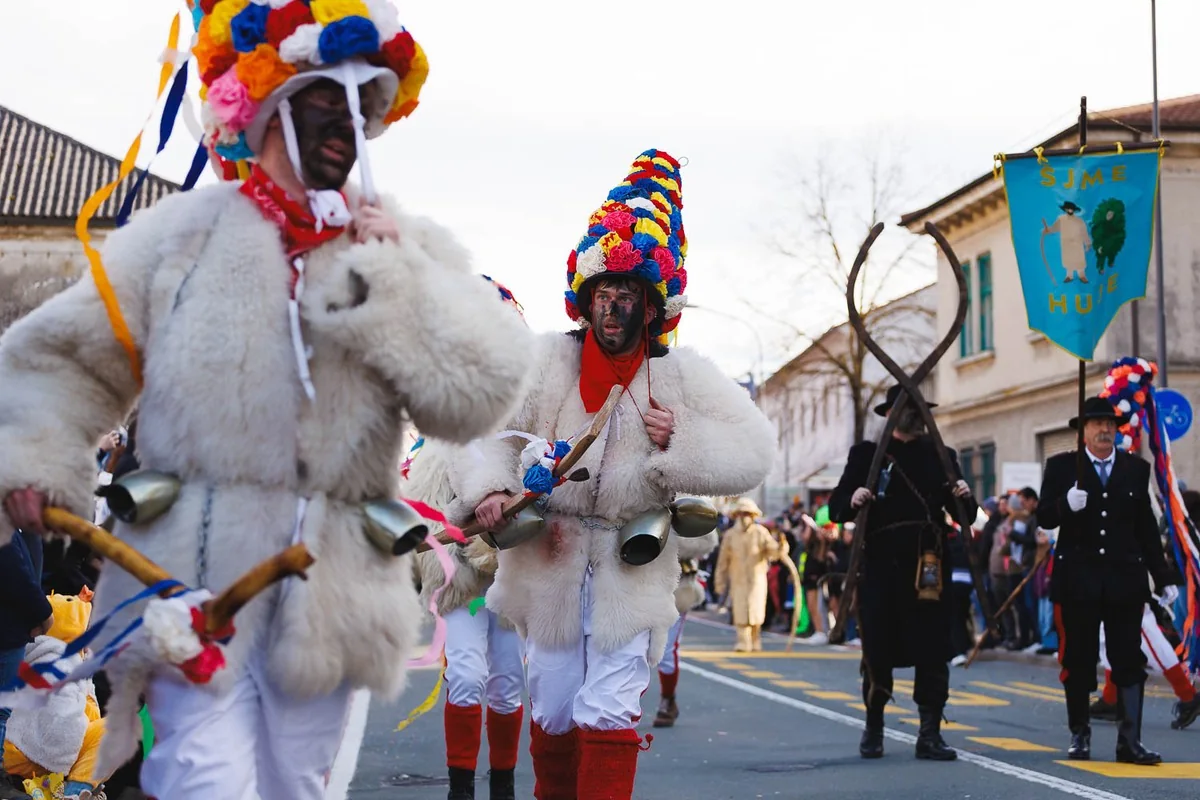
Hujanske šjme
Carnival collection round
Hujanske šjme, also known locally as šjmarji, are the traditional carnival group of the village of Huje. According to the description of the tradition, preparations begin after Christmas. The central event is the collection round on Carnival Saturday, when the group visits homes throughout the village and collects gifts.
Characteristic figures include the flag bearer, grdini, kleščar, poberina, musicians, bride and groom, bridesmaids, »ta str« and »ta stara«, a pair of oxen with their driver, farmers, a mower, stržinar and green figures. The custom connects different generations and enables practical transfer of knowledge.
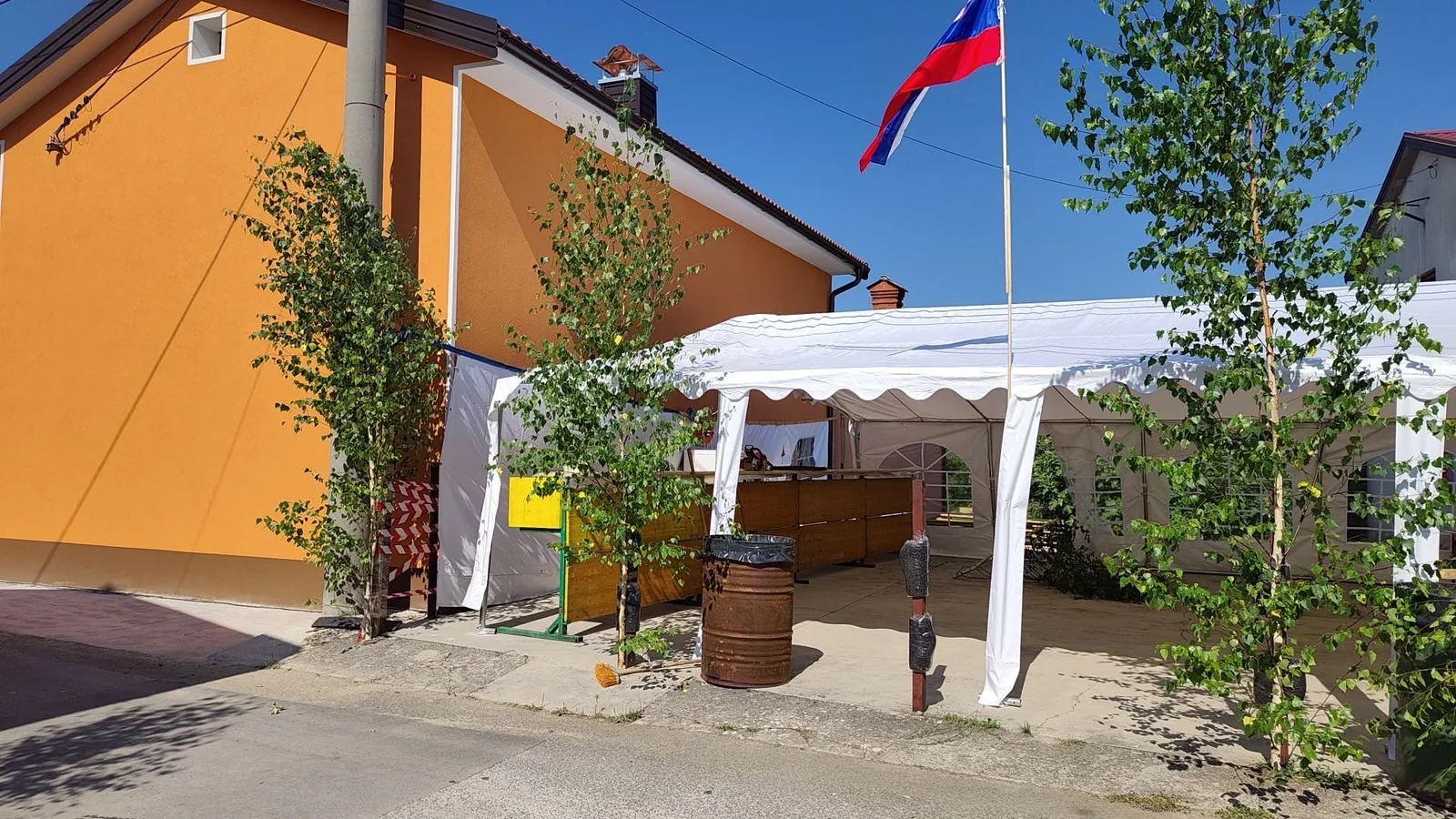
Traditional event
Shod Huje
Shod Huje is a traditional village event. In different parts of Slovenia, this type of gathering is also known by names such as proščenje, žegnanje, patrocinij, lepa nedelja, cerkvanje, semenj, šagra, opasilo and žegen. Huje belongs to the Pregarje area and parish, whose patron saint is St Lawrence.
Shod Huje is normally held on the first weekend of August, shortly before the feast of St Lawrence. In 2025 and 2026 the two-day event was open to the public and, according to the association's estimate, attracted around 400 visitors.
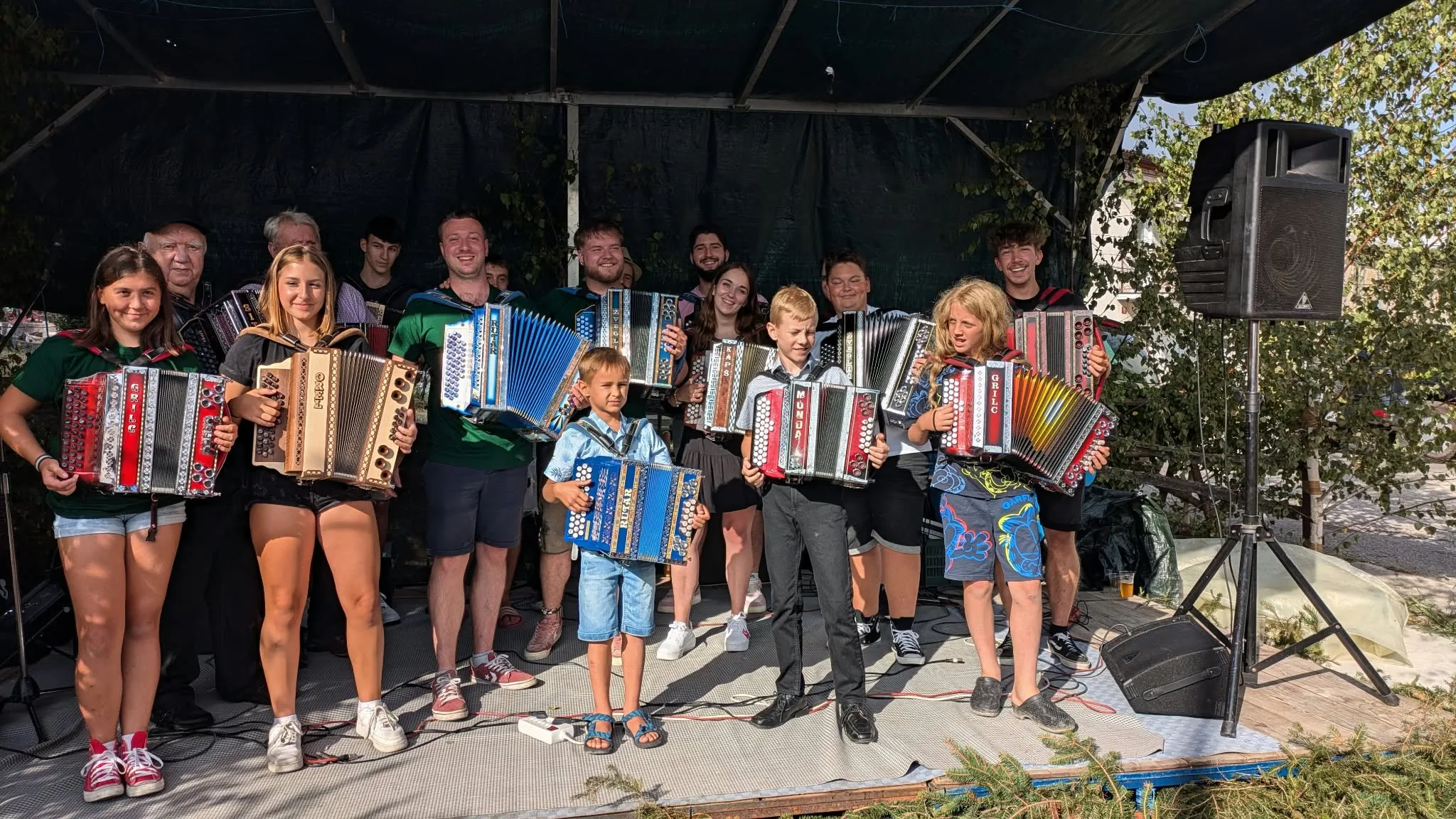
Music
Accordion meetings
The accordion meeting is part of the Shod Huje programme but has its own time slot, performers and programme. The first meeting was held on 4 August 2024 with 18 participants; in 2025, 23 accordion players performed, and in 2026 there were 16.
The accordion meetings are organised in cooperation with Marko Vatovec, a world champion in diatonic accordion playing. A special feature is the involvement of children and teenagers alongside adult and older performers. The event connects places, generations and amateur music culture.
Village landscape
Village spring and pond
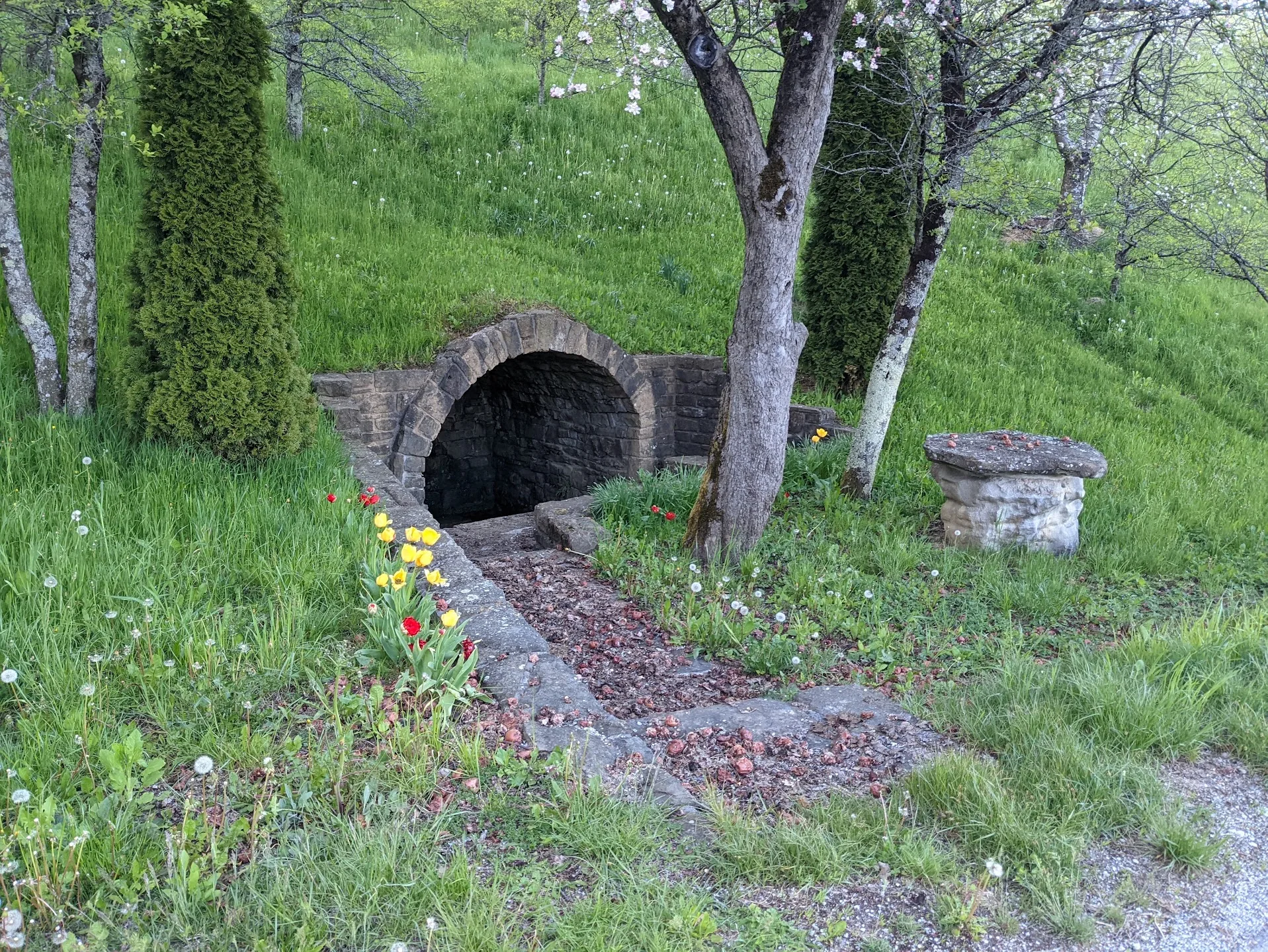
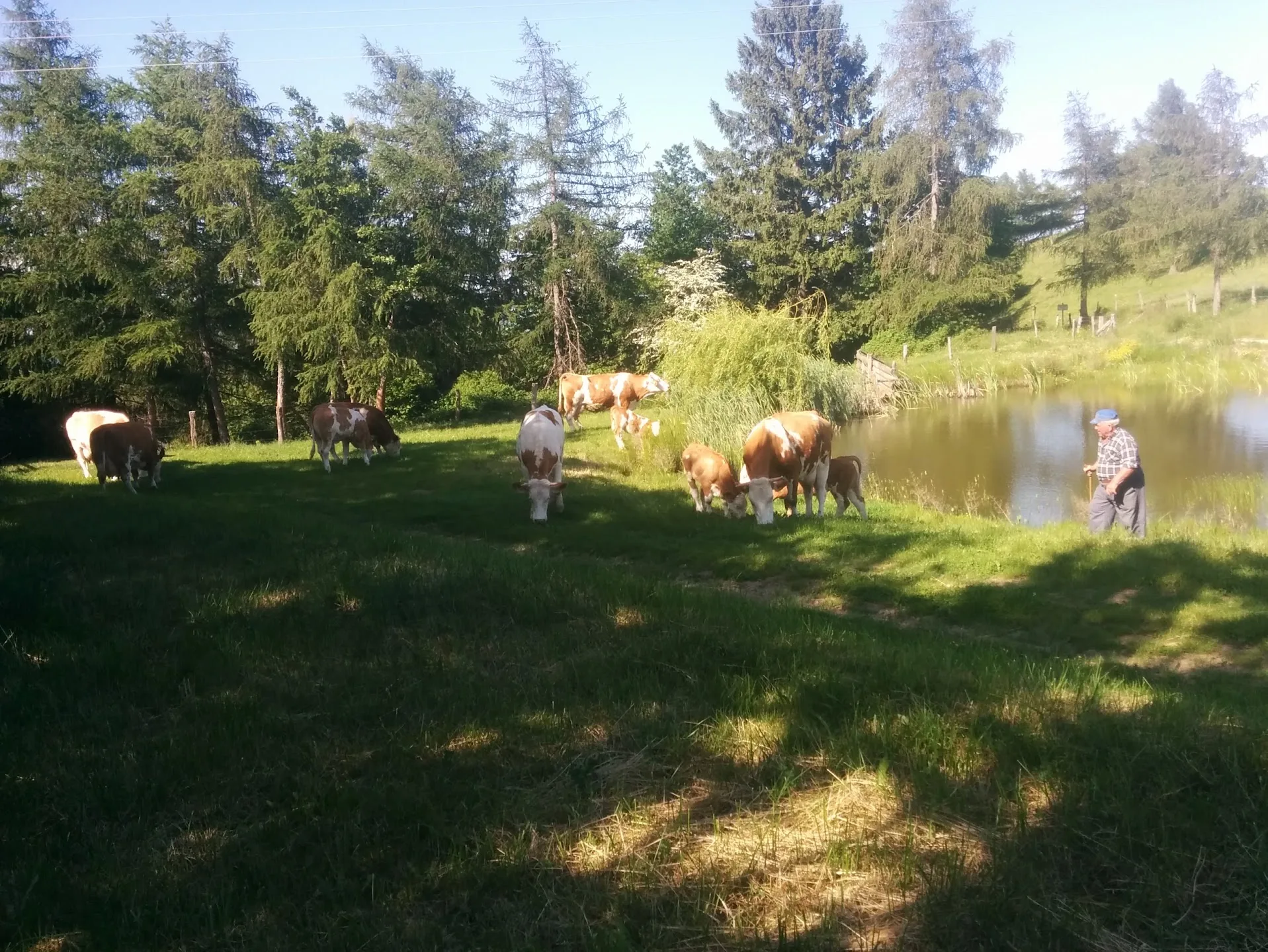
Through volunteer work actions, members care for the village spring and pond. Both places have historical, ethnological and cultural significance for the village and were connected with everyday life and the watering of livestock.